
The 97th Annual Meeting of The Society of Rheology
Conference registration includes access to all technical sessions and the vendor display, the program booklet, and all receptions and coffee breaks. The registration fee does not include the Bingham Medal Banquet. Member registration rates are only available to SoR members that joined before July 1, 2026.
(click on the button above)
Having issues? You can register by copying and pasting this url: https://tools.eventpower.com/reg/search_user?show_id=3188
Onsite check-in of registrants will be held on Sunday October 25 from 4-6pm at the Hilton Park Plaza. Check-in will also be held Monday, October 26 through Wednesday, October 28 from 8am to 4pm at the same location.
Registration Fees
Early Bird Rates (valid until September 4, 2026 or until September 30, 2026 for Short Course)
Meeting |
Banquet |
Short Course |
Short Course |
|
Member |
$540 |
$132 |
$1080 |
$720 |
Non-member |
$660 |
$132 |
$1260 |
$840 |
Student Member |
$270 |
$80 |
$540 |
$360 |
Student Non-member |
$330 |
$80 |
$600 |
$400 |
Retired |
$270 |
$132 |
$540 |
$360 |
Exhibitor |
$3600 |
$132 |
$1260 |
$840 |
Regular Rates (valid September 5 - October 25, 2026)
Meeting |
Banquet |
Short Course |
Short Course |
|
| (as of June 30, 2026) |
$660 |
$156 |
$1200 |
$800 |
$780 |
$156 |
$1380 |
$920 |
|
| (as of June 30, 2026) |
$366 |
$100 |
$660 |
$440 |
$426 |
$100 |
$720 |
$480 |
|
$366 |
$156 |
$660 |
$440 |
|
Exhibitor** |
$4800 |
$156 |
$1380 |
$920 |
**we have reached capacity for exhibitors so are no longer accepting exhibitor registrations
Short Course: Tribo-Rheology: Flow and friction in predicting texture and performance |
Saturday, October 24 - Sunday, October 25 |
Saturday, October 24 - Sunday, October 25 |
|
Onsite Registration | Hilton Park Plaza |
Sunday, October 25 | 3-6pm |
Welcome Reception | Hilton Park Plaza |
Sunday, October 25 | 6-8pm |
Student Industry Forum |
Monday October 26 | 12 - 1:15pm |
Monday, October 26 - Thursday, October 29 |
|
Exhibitor Booths |
Monday, October 26 - Wednesday, October 28 |
Student Trivia Night |
Monday, October 26 |
SoR Business Meeting |
Tuesday, October 27 | 12-1:15pm |
Bingham Reception & Banquet | Park Plaza Grand Ballroom |
Tuesday, October 27 | reception: 6:30-7:30pm, banquet: 7:30-9pm |
Wednesday, October 28 | 9:15am-8pm |
|
Poster Session | Park Plaza Georgian Room |
Wednesday, October 28 | 6:30-8:30pm |
Poster and Gallery Prize Awards | Park Plaza Georgian Room |
Wednesday, October 28 | 8-8:30pm |
View the full detailed online program here

97th meeting logo
Made with Google AI
for more details about the sessions listed below, including topics, speakers, abstracts and location
Sunday |
Monday |
Tuesday |
Wednesday |
Thursday |
|
8:30a-9:20a |
day 2 of short course + RRS |
plenary I |
Bingham lecture |
plenary II |
Metzner lecture (8-8:40am) |
9:20a-9:50a |
coffee break |
||||
9:50a-11:50a |
technical session IA + invited special symposium |
technical session IB |
technical session IC |
technical session ID (8:40-10:00a) |
|
11:50a-1:30p |
registration |
lunch | student industry forum |
lunch | business meeting |
lunch | Future Flows crash course & careers |
coffee break (10:00-10:25a) |
1:30p-3:10p |
technical session 2A |
technical session 2B |
technical session 2C |
technical session 2D (10:25a-12:05p) |
|
3:10p-3:45p |
coffee break |
||||
3:45p-5:45p |
technical session 3A + invited special symposium |
technical session 3B |
technical session 3C |
||
evening |
welcome reception |
student trivia night |
Bingham reception + banquet |
poster session + reception |
|

97th meeting logo
The submission portal for abstracts for Oral Presentations, Posters and Gallery of Rheology are now open.
Any individual should only be designated as speaker for at most one oral presentation
Deadlines are listed in the Deadlines tab.
To submit an abstract:
- Go to the Abstract Submission Portal
- Create a new account by clicking on First-time user? Click here to set up your account . EVERYONE will need to create a new account.
- Once you have an account, login to your account, read the abstract guidelines, and go to the bottom of the page and click on: Click Here to Begin Your Abstract Submission
- Choose your abstract type (Invited*, Contributed Oral, Poster or Gallery)
- Complete all of the required fields following the instructions provided
- To submit your abstract, click on SUBMIT NOW For Review
- You will receive an email confirmation once you submit, if you do not receive the confirmation, contact abstracthelp@rheology.org
If you have any issues with your submission, contact abstracthelp@rheology.org.
*keynotes, plenaries and awards ONLY

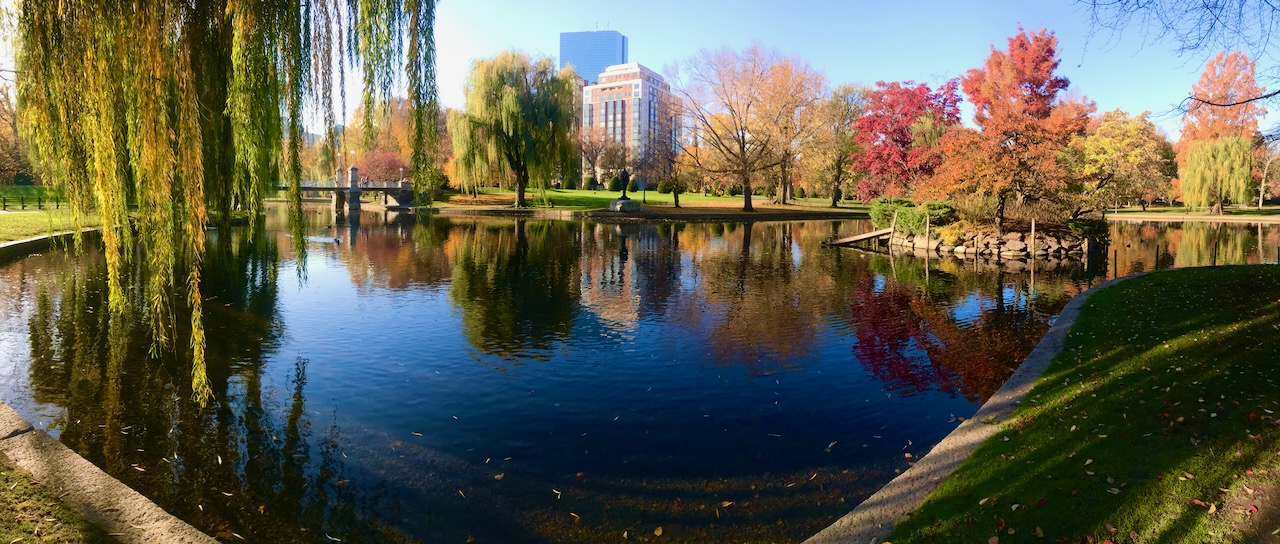
Boston beauty
The 97th Annual Meeting of The Society of Rheology will be held in Boston, Massachusetts. The technical program will take place October 25-29 at the Hilton Boston Park Plaza . The Rheology Research Student Symposium (RRS) on October 24-25, as well as short course on October 25, will also be held at the Park Plaza hotel.
Boston, one of the oldest cities in the United States, blends historic character with world-leading innovation. Founded in 1630, the city played a central role in the American Revolution and remains a cultural and intellectual hub. Visitors can walk the historic Freedom Trail, explore vibrant neighborhoods like Back Bay and the Seaport District, or enjoy waterfront views along Boston Harbor. Today, Boston is globally recognized for its universities, hospitals, research institutions, and a vibrant hub for technological entrepreneurship. Boston also offers a thriving arts and culinary scene. Attendees can visit the Museum of Fine Arts, Boston, explore contemporary galleries in the South End, or experience public art and performance spaces throughout the city.
The city’s dining culture ranges from historic seafood establishments to innovative farm-to-table restaurants. New England specialties — including lobster rolls, clam chowder, and fresh Atlantic seafood — are local favorites. With its walkable neighborhoods, waterfront setting, and vibrant academic community, Boston provides an inspiring backdrop for collaboration and scientific exchange.
In late October, Boston typically sees average highs around 57–62°F (14–17°C) and lows around 42–48°F (6–9°C), and — with New England’s autumn foliage often at or near its peak in mid-to-late October — attendees can enjoy colorful fall leaves around the city and region; layers including a light-to-medium coat, sweater, and comfortable shoes are recommended for cool mornings and mild afternoons.
Lodging
The Society of Rheology has reserved room blocks at the Hilton Boston Park Plaza for attendees of the SoR 97th Annual Meeting. The Hilton Boston Park Plaza is also the venue for the conference technical program, RRS, and short course. Hilton Boston Park Plaza is located centrally in Boston in a walkable area close to many local attractions.
The base conference rates for hotel rooms based on occupancy are:
- Single/Double Occupancy — $289.00
- Triple Occupancy — $309.00
- Quad Occupancy — $329.00
Applicable taxes of 16.45% will be added.
Book your room
Through the link above you can book rooms from Thursday, October 22 through Thursday, October 29. The group rate is available for up to three nights before or after that range, but reservations must be made by contacting BOSSR_RES@hilton.com because only the official dates will appear on the registration link.
Questions about an existing reservation? Contact BOSSR_RES@hilton.com
Getting There
Boston is easily accessible by air, rail, and car.
Air Transportation
Most travelers will fly into Logan International Airport (BOS), located just 10–15 minutes from downtown Boston and the Seaport District. Logan offers extensive domestic and international connections. Ground transportation options from the airport include taxis, rideshare services, airport shuttles, and public transit via the MBTA Silver Line, which provides direct service to the Seaport and South Station at no additional fare.
Rail Transportation
Boston is well connected by Amtrak’s Northeast Corridor, with frequent service to and from New York City, Washington, D.C., and other major cities. Trains arrive at South Station, conveniently located near the convention center and many conference hotels. Regional commuter rail lines also connect Greater Boston and surrounding communities.
Public Transportation
Boston’s public transportation system, the MBTA, provides subway, bus, and commuter rail service throughout the city and surrounding areas. The Silver Line offers direct service between Logan Airport and the Seaport District. Boston is also a highly walkable city, with many hotels, restaurants, and attractions within easy walking distance of the conference venue.
Driving and Parking
Boston is accessible via major interstate highways including I-90 (Mass Pike) and I-93. On-site parking is available at the convention center, and additional garages are located throughout the Seaport and downtown areas. Attendees are encouraged to review parking options in advance, as availability and rates may vary.
Questions? Reach out to the meeting organizers:
Local Organizing Committee: Gareth McKinley (Chair), Safa Jamali, Jonathan Rothstein
Program Chairs: Travis Walker, Arezoo Ardekani

Boston city lights
97th meeting
Technical Symposia
- Colloidal Suspensions and Granular Materials
Organizers: Lilian Hsiao, Ivan Christov, Michela Geri - Self-Assemblies, Gels, and Networks
Organizers: Ria Corder, Fardin Khabaz, Thomas O’Connor - Polymer Solutions, Melts, and Blends
Organizers: Christian Clasen, Carlos López-Barrón, Michelle Calabrese - Interfacial Rheology, Surfactants, Foams, and Emulsions
Organizers: Sara Hashmi, Reza Foudazi, Carlos Martinez - Biomaterials, Bio-fluid Dynamics, and Biorheology
Organizers: Vivek Narsimhan, Adrianne Rosales, Jeff Guasto - Flow-Induced Instabilities and Non-Newtonian Fluids
Organizers: Simon Haward, Hadi Mohammadigoushki, Bavand Keshavarz - Techniques and Methods: Rheometry, Tribometry, Spectroscopy, and Microscopy
Organizers: Benjamin Yavitt, Xiaoyu Tang, Abhishek Shetty - Additive and Advanced Manufacturing
Organizers: Anthony Kotula, Madhu Majji, Daniel Rau - AI and ML in Rheology
Organizers: Michael Graham, Mingyang Tan, Amanda Howard - Applied Rheology for Industrial Applications
Organizers: Joseph Barakat, Baran Teoman, Antonio Perazzo - Rheology and Sustainability for Energy and Production
Organizers: Qin (Maggie) Qi, Jeff Richards, Joseph Samaniuk - Rheology of Field-Responsive Materials and Soft Robotics
Organizers: Laurel Kroo, Samanvaya Srivastava, Bhuvnesh Bharti
Special Sessions
- Rheology in Biopharmaceuticals, Bioprinting, and Tissue Engineering
Organizers: Rae Robertson-Anderson, John Frostad, Kelly Schultz - Tribo-rheology: Flow and friction in predicting texture and performance
Organizers: Lilian Hsiao, Antonio Perazzo - Future of Rheology (Mini Session)
Organizers: William Hartt, Matt Helgeson, Rishabh More
Posters & Galleries
- Poster Session
Organizers: Ryan Poling-Skutvik, Hammad Faizi, Amanda Marciel - Gallery of Rheology Session (Image)
Organizers: Paulo Arratia, Tony Gao, Zahra Niroobakhsh - Gallery of Rheology Session (Video)
Organizers: Reza Foudazi, Madhar Azad, Arif Nelson
view the detailed online program
for times, locations, speakers and abstracts for the symposia
Plenaries
-
 Roger T Bonnecaze2026 Bingham Medalist | University of Texas at Austin
 -
 Jeffrey Richards2026 Metzner Awardee | Northwestern University
 -
 Roseanna ZiaDave Wollersheim Professor of Mechanical and Aerospace Engineering | University of Missouri
 -
 Howard StoneNeil A. Omenn ’68 University Professor of Mechanical and Aerospace Engineering | Princeton University


Keynote Speakers | Rheology in Biopharmaceuticals, Bioprinting, and Tissue Engineering | Special Session
-
 Shu YangProfessor of Materials Science and Engineering | University of Pennsylvania
 -
 Maggie QiAssistant Professor of Chemical Engineering | MIT
 -
 Jeff MartinPrincipal Scientist | Kenvue
 -
 Leila DeraviAssociate Professor of Chemistry and Chemical Biology | Northeastern University
 -
 Ritu RamanAssistant Professor of Mechanical Engineering | MIT
 -
 Emily DavidsonAssistant Professor of Chemical and Biological Engineering | Princeton University


Keynote Speakers | Tribo-rheology: Flow and friction in predicting texture and performance | Special Session
-
 Rosa M. Espinosa MarzalProfessor Materials Science & Engineering, and Environmental Engineering & Science | University of Illinois at Urbana-Champaign
 -
 Gustavo S. LuengoScientific Expert and Ambassador | L’Oréal
 -
 Maria Martinez-VillagranSr Director Global Strategic Business Unit Sweet Goods, Taste, Texture, and Health | DSM-Firmenich
 -
 Teanoosh MoaddelAssociate Director R&D | Unilever
 -
 Jun QuCorporate Fellow and Group Leader of Surface Engineering & Tribology | Oak Ridge National Laboratory
 -
 Jason StokesProfessor of Chemical Engineering | University of Queensland


- Esther García-Tuñón | Senior Lecturer in Materials, Design and Manufacturing Engineering | University of Liverpool
- Michael Brenner | Professor of Applied Mathematics and Applied Physics | Harvard University
- Liheng Cai | Associate Professor of Materials Science and Engineering | University of Virginia
- Manolis Chatzigiannakis | Assistant Professor of Chemical Engineering and Chemistry | TU Eindhoven
- Ria Corder | Assistant Professor of Chemical and Biomolecular Engineering | University of Tennessee
- Reza Foudazi | Associate Professor of Chemical, Biological and Materials Engineering | University of Oklahoma
- William Hartt | Professor of Chemical and Biochemical Engineering | University of Delaware.
- Savvas G. Hatzikiriakos | Professor of Chemical and Biological Engineering | University of British Columbia
- Sunilkumar Khandavalli | Research Engineer | NIST
- Anthony Kotula | Staff Scientist | NIST
- Daeyeon Lee | Professor of Chemical and Biomolecular Engineering | University of Pennsylvania
- Arnold Mathijssen | Assistant Professor of Physics and Astronomy | University of Pennsylvania
- Thomas O’Connor | Assistant Professor of Chemical Engineering | Carnegie Mellon University
- Rosanna Pasquino | Professor of Chemical, Materials and Production Engineering | University of Naples
- Ryan Poling-Skutvik | Assistant Professor of Chemical Engineering | University of Rhode Island
- Andrei Potanin | Principal Scientist | Colgate-Palmolive
- Gabriel Sanoja | Assistant Professor of Chemical Engineering | UT Austin
- Abhi Singh | Assistant Professor of Macromolecular Science and Engineering | Case Western Reserve University
- Vivek Singh | Research Scientist | NIST
- Radhakrishna Sureshkumar | Professor of Biomedical and Chemical Engineering | Syracuse University
- more coming soon!
Rheology Research Symposium Applications Due |
May 15, 2026 |
Abstracts for Oral Presentations Due |
May 22, 2026 |
Registration Opens |
July 10, 2026 |
Abstracts for Poster Session and Gallery of Rheology |
August 14, 2026 |
Early-bird Registration Deadline |
September 4, 2026 |
September 7, 2026 |
|
Poster Competition Files Due |
October 9, 2026 |
Gallery of Rheology Videos and Images Due |
October 16, 2026 |

Boston in October
The Society of Rheology Policy on Number of Talks per Speaker at the SOR Annual Meeting
As part of the instructions for abstract submission to the SOR Annual Meeting, submitters will be informed of the following information:
“During the abstract submission process, any individual should only be designated as speaker for at most one oral presentation.”
-Adopted by the SOR Executive Committee, 20 October 2019
The Society of Rheology Photo Policies
Content of Presentation
Content presented at the SoR Annual Meeting and public events organized bt the Society is the property of the presenters and the organizations that employ them. The use of any device to capture images (e.g., cameras and camera phones) or sound (e.g., tape and digital recorders) or stream, upload or rebroadcast speakers or presentations is strictly prohibited. Presenters are of course free to share slides and other materials upon request, but are under no obligation to do so.
Authorized Photographs or Recordings
In registering for, or participating in, the SOR Annual Meeting or any other event organized by the Society, attendees grant to the Society, its affiliates and licensees (collectively referred to as “the Society”), royalty-free permission, including the exclusive worldwide, irrevocable rights in all languages, to reproduce in all formats, including, but not limited to print, microfilm, electronic, and/or CD-ROM, their likeness as shown in the photograph(s) or recordings taken by authorized meeting photographers at the event.
Attendees waive the right to inspect or approve any copy that is used in connection with the photographs and release and discharge the Society from any and all claims arising out of use by the Society of the photographs for the purposes described above, including any claims for libel and invasion of privacy.
-Adopted by the SoR Executive Committee, 20 October 2019
The Society of Rheology Code of Conduct and Anti-Harassment Policy
Code of Conduct
It is the policy of The Society of Rheology (SoR) that all participants at the SoR annual meeting and other SOR associated activities will conduct themselves in a professional manner that is welcoming to all participants and free from any form of discrimination, harassment, or retaliation. This policy applies to all participants including attendees, guests, contractors, vendors, volunteers, and all other stakeholders. Participants will treat each other with respect and consideration to create a collegial, inclusive, and professional environment. All SoR meeting or event participants share responsibility for creating a supportive environment to enable scientific discourse.
Accordingly, all participants will avoid any inappropriate actions or statements based on individual characteristics including but not limited to age, race, ethnicity, sexual orientation, gender identity, gender expression, marital status, nationality, political affiliation, ability status or educational background.
All participants will show respect for one another, regardless of discipline, employment or educational status, and organizations for which they work, whether industry, academia, or government. All participants should strive to treat each other as equals having a valuable contribution to the Society.
All participants in SoR meetings are free to express their scientific views, while also recognizing that such views should be expressed collegially and respectfully in the spirit of advancing knowledge and understanding.
Disruptive or harassing behavior of any kind will not be tolerated. Harassment includes but is not limited to inappropriate or intimidating behavior and language, unwelcome jokes or comments, dismissive or insulting modes of address, unwanted touching or sexual attention, offensive images, coercion and stalking. Harassment does not require an intent to cause injury or be offensive. When unwelcome by the recipient, actions intended as a joke or even as a compliment can contribute to harassing behavior. Harassment is not only damaging to individuals, but also to the Society as a whole by discouraging participation in the Society and hampering our mission to expand the knowledge and practice of rheology around the world.
Reporting Violations
Violations of this policy should be reported to any member of the SoR executive committee or other designees appointed by the executive committee, or through the web portal. Additional information about reporting methods will be provided for each SoR meeting and on the website. When reporting you will be asked to provide details about the incident, names of individuals involved, and names of any witnesses.
The Society of Rheology is committed to maintaining the anonymity of all involved persons including complainants and witnesses except where doing so would compromise another person’s rights or the SoR’s ability to investigate and respond to violations. In such cases, the SoR will only disclose information necessary to investigate the allegations. Complaints may be made anonymously, but sufficient detail is required to proceed with an investigation or act on a complaint.
It is a violation of this policy to intimidate, retaliate against, or threaten individuals who report harassment or provide any information about possible violations of this policy. Any retaliatory actions or threats should be reported and will be investigated.
Investigative Procedures
The SoR executive committee shall appoint a code of conduct violation and harassment response team (hereafter refered to as response team) that can provide a rapid initial evaluation of all complaints during SoR meetings and activities. The team shall be composed of the past president (chair), the vice president, a delegate from the general membership, and any other appointees as voted by the executive committee. If any member of the response team is implicated in a complaint or has a conflict of interest, they will recuse themselves and a replacement will be appointed by the president or, if the president is also implicated, by a vote of the remaining executive committee.
The response team will receive all reports of code of conduct violations, provide an initial evaluation, and determine a path forward during SoR events. The team will determine (1) if the alleged behavior potentially violates the code of conduct policy, (2) if there is sufficient information to proceed with an investigation, (3) if the situation may be resolved through an informal process, or (4) if a formal investigation is warranted. The executive committee shall retain records of all complaints for a minimum of 5 years and the response team shall check to see if individuals involved in complaints have a history of being reported for code of conduct violations when determining whether to pursue further investigation.
In the event that further investigation is warranted, the response team, in consultation with the president, will appoint an investigator (individual or committee) to investigate the incident, and an advocate for the complainant. The investigator and advocate can be selected from the executive committee, the American Institute of Physics, the Society at large, a third-party consultant, or a combination thereof. If the reported incident involves any criminal behavior the police will be called if required by law.
The purpose of the SoR investigator is to uncover the facts, evaluate them in an unbiased way, and reach conclusions as to the events that took place. The investigator should interview the complainant, the accused, and any witnesses provided by either party. A report including the facts and conclusions should be written and provided to the executive committee.
The purpose of the advocate is to ensure that the complainant feels safe attending the meeting or event while the complaint is investigated. Depending on the nature of the complaint it may be necessary to keep the complainant and accused separated during the investigation. Every effort will be made to ensure that the complainant can continue to fully participate in the meeting or event during the investigation.
Upon completion of the investigation the full executive committee (excluding individuals who may have been implicated in the complaint) shall meet to discuss the report findings and the committee will determine whether the Society code of conduct and anti-harassment policy has been violated. If the committee finds that this policy has not been violated, both the complainant and the accused will be informed of the result. If the committee finds that this policy has been violated, they shall determine what disciplinary measures are warranted for the incident and inform the offender. The complainant shall be informed of the finding that the policy was violated, and it shall be determined by the committee whether any additional information about disciplinary measures can be shared.
Disciplinary Measures
Disciplinary measures may include verbal or written warnings, required training (code of conduct, harassment, civility and/or professionalism training, for example), ejection from the meeting without refund, a ban from attending one or more future meetings, suspension of membership for one or more years, or reporting to the accused’s employer.
The Society of Rheology holds its executive committee members, standing committee chairs, fellows and award winners to the highest standards. As such a code of conduct violation may result in removal from the executive committee or other named positions, ineligibility for the executive committee or other society roles, temporary or permanent revocation of awards and fellowship, or temporary or permanent ineligibility for award and fellowship nomination.
The accused has a right to appeal. Grounds for appeal include (1) a conflict of interest or bias that affected the outcome of the case, (2) any sanctions imposed were not appropriate for the violation(s), and (3) new information that was not available at the time of the decision. Barring unusual circumstances, an appeal must be submitted within 30 days of notification.
The SoR understands that we are all human and we all make mistakes. The harassment policy is not meant to be punitive, but to provide a holistic framework to ensure that all society stakeholders are treated respectfully and professionally by one another. Sanctions shall be applied proportionally to the nature of the violation, with a goal of education to prevent future violations, and towards ensuring that the SoR remains a welcoming environment for everyone.
-Adopted by the SoR Executive Committee, 28 April 2019. Updated 15 October 2023.
In conjunction with the poster session, The Society of Rheology hosts a poster competition to encourage student and postdoc presentations and participation in the meeting and to recognize excellence.
To qualify for the Student Poster Award competition, you must have not earned your PhD. To qualify for the Postdoctoral Fellow Poster Award competition, you must have received a doctoral degree and be ‘engaged in a temporary and defined period of mentored advanced training to enhance the professional skills and research independence needed to pursue your chosen career path’.
Submission Guidelines
Participants must:
- be first authors of the poster they enter in the competition
- be a student or postdoctoral fellow at the time of the meeting, depending on the competition selected.
- bring a printed version of their poster to display during the poster session
- be available to discuss the poster at the poster session.
- submit an abstract for the poster session by August 14, 2026
- upload their poster in PDF format here by October 9, 2026.
Poster specifications:
- Printed posters must not exceed 46" W x 36" H
- Uploaded digital posters must not exceed 3 MB
- Uploaded digital posters must be PDF format
Judging Criteria
A panel of judges will select up to eight finalists in each section based on submitted posters who will be notified in advance of the meeting. The final selection of 1-3 winners will be made by the judges during the Poster Session on Wednesday October 28, 2026 and announced at its conclusion.
Posters will be judged according to the following criteria:
- Originality of research - 15%
How novel is the work? Does the author distinguish the work with respect to other ongoing or past work in the same topical area? - Quality of execution of the work - 30%
How well thought out were the experiments/simulations/theory? Were data verified and experimental errors eliminated systematically? - Scientific impact - 30%
What is the current or potential future impact of the work? Is the context clearly demonstrated? - Quality of presentation of the work - 25%
How good are the layout and clarity of poster? Does the author make a lucid, well informed presentation of the work?
Past Winners
Get inspired by past winners of the Student Poster Award and Postdoctoral Fellow Poster Award
More Questions?
Reach out to the organizers:
- Ryan Poling-Skutvik ryanps@uri.edu
- Hammad Faizi HFaizi@dow.com
- Amanda Marciel am152@rice.edu
The Gallery of Rheology Contest is designed to showcase all aspects of rheology. Participants can choose to enter either the Image Contest or Video Contest. The submissions are judged for their combination of striking visual qualities and scientific interest.
All image and video entries will be displayed on a large monitor in the Ballroom near the registration table at the SoR Meeting. Digital versions will also be available to meeting attendees through a dedicated website where they can vote for their favorite entry in each category (image and video).
Authors of the winning image entry, chosen by judges and popular vote at the meeting, will be invited to have their image on the cover of an issue of the Rheology Bulletin .
All participants must upload their image or video here by October 16, 2026.
Image Submission Guidelines
Each Gallery Image participant will have a 2 ft W x 3 ft H area to display their printed image during the meeting. Participants must also upload their image here by October 16, 2026.
Images should adhere to the following specifications
- Contain high-resolution photographs and/or graphics along with brief explanatory text, and names and affiliations of all authors.
- Accepted file formats are JPG, PNG and PDF.
- Maximum file size of 100 MB.
- Maximum images size of 2 ft W x 3 ft H.
Video Submission Guidelines
Participants must also upload their video here by October 16, 2026. Videos must adhere to following specifications:
- Recommended resolution of 1920 x 1080.
- Include a dark blue [Hex #1f295d; RGB(31,41,93); HSL(230,50%,24%)] title screen with white text stating the video title, contributor names, and affiliations.
- Maximum duration of 150 s
- Maximum file size of 250 MB
- No audio
Judging Criteria
The winner of each category will be determined by the selection of the judges and the results of attendee voting.
Images
- Aesthetics (50%)
How is the layout and presentation of the images? Are the images able to capture the audience’s attention? - Scientific Originality (25%)
Is the novelty and originality of the research image clearly described or displayed? - Caption Clarity (25%)
Are the captions able to explain the image clearly?
Videos
- Aesthetics (50%)
Is there a clear narrative or display of the scientific content? Are layouts, timing, and presentation of videos able to capture attention throughout the runtime? - Scientific Originality (25%)
Is the novelty and originality of the research images clearly described or displayed? - Caption Clarity (25%)
Are the videos running smoothly/clearly and within the specified timing? Are transitions appropriate?
Past Winners
Get inspiration from previous Gallery of Rheology Winners and the 2025 Gallery of Rheology Video Entries
More Questions?
Image Contest Organizers:
- Paulo Arratia parratia@seas.upenn.edu
- Zahra Niroobakhsh niroobakhshz@umkc.edu
- Tony Gao Tong.Gao@tufts.edu
Video Contest Organizers:
- Reza Foudazi rfoudazi@ou.edu
- Madhar Azad mazad@ualberta.ca
- Arif Nelson arif.nelson@singaporetech.edu.sg